пятница, 3 октября 2008 г.

Archives 2004: Women's hose

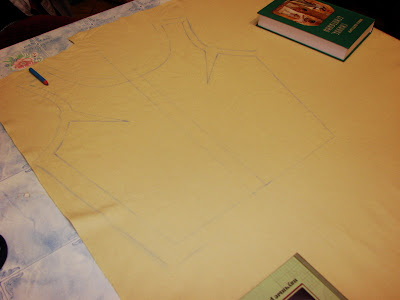
At first I've had to make a pattern for my future hose. To make hose fit well when they will be sewn I had to measure carefully my legs to my knees and feet in every possible dimension.
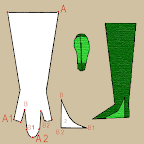
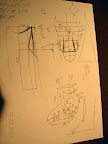

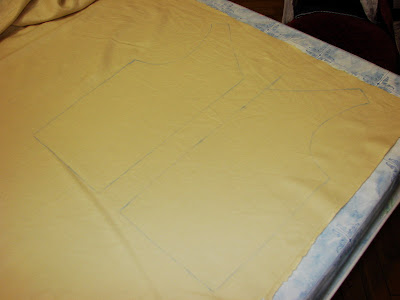
After measures were taken I've started to paint pattern of the knee-length hose.

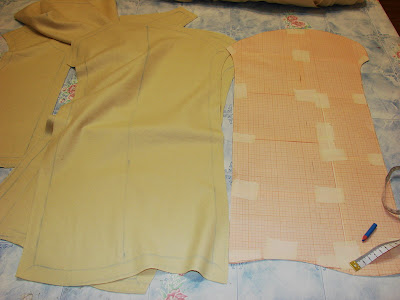
Next step - making a model to check fit and size.
Best choise is to take cheap canvas that can be equally stretched in both directions.
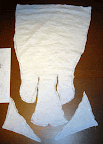


Model is to be fit to you foot's actual form.

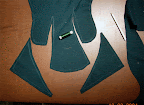
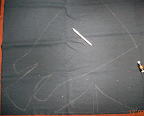
Next step - to cut the details off the desired fabric, I've taken dark-green woolen baize.


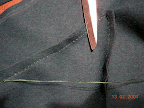
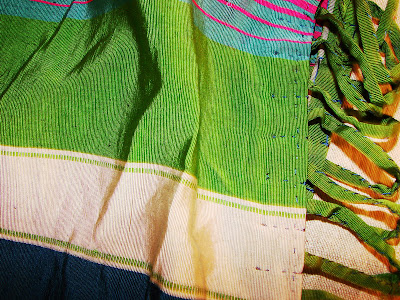
Sewing gussets with strenghtened backstitch:
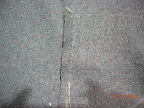


To sew the backseam use overlapping stitch:
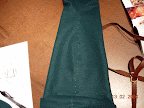


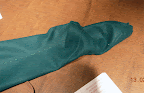
I washed my hose in the washmashine at normal regime for wool, unfortunately, later they were washed at linen regime and became felted hose of a kid's size.
Washing is described in hose-sewing process as it is normal to sew hose a bit bigger than you've planned, but washing makes them fit better. So - do not wash or steam woolen fabric before sewing your hose.

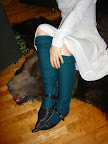
Result




Sources

1. Hose from Herjolfsnes # 91
2. Hose from London
3. Compilation of images (source in russian)
4. Stitches used in Middle Ages
5. Seams types from London excavations
6. Munchen hose
7. Roman of Rose, Bodleyan Library, ~1500


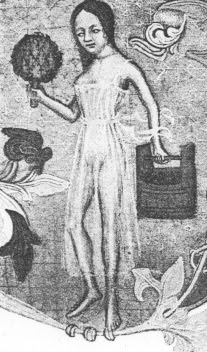
Knee-length sewn hose were a usual part of medieval women's garment, having been depicted in many artworks of different painters and miniaturists.
четверг, 2 октября 2008 г.

Balance Quintain - the game of commoners


France, 1500, coloured glass, silver stain, vitreous paint.

Man and woman are playing a strange game - she's sitting on a basket holding her foot against the man's foot. What are they doing?

Initially, the game of Quintain was a part of knight's exercises - they tried to strike a dummy or other target. Balance Quintain was a variation for those of a lower station, and by the XV century it became one of the court games, as is shown in this glasswork (probably, they are ascertaining what sheep is whose).

среда, 1 октября 2008 г.

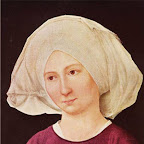
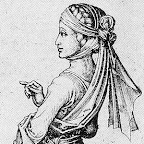
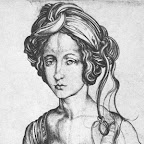
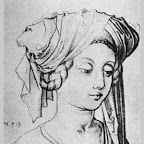
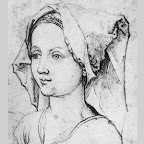
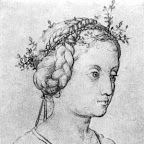
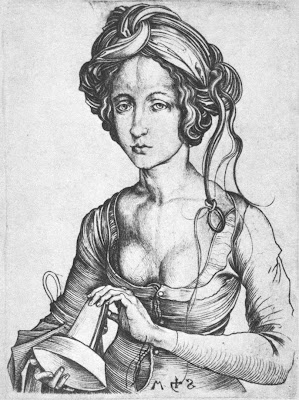
Headdresses after Schongauer

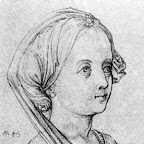
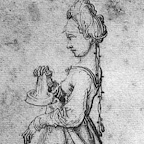
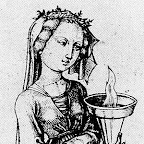
Inspiring girls look at us through the ages being depicted in black ink on some old paper. Look at them and you find true fashionistas among them!
Multilayer linen and silken scarves and veils, beads and pendants, braids and decorated laces in comlex combinations make me feel myself ignoramus!

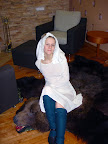
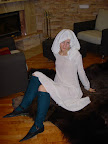
New start: European XVc Chemise

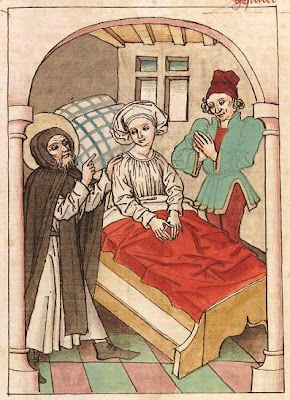
Images of late XVc german and flemish chemises

1. Life of Saints, Southern Germany manuscript, 1477


2. Martin Schongauer, Foolish Virgin, 1480

вторник, 16 сентября 2008 г.

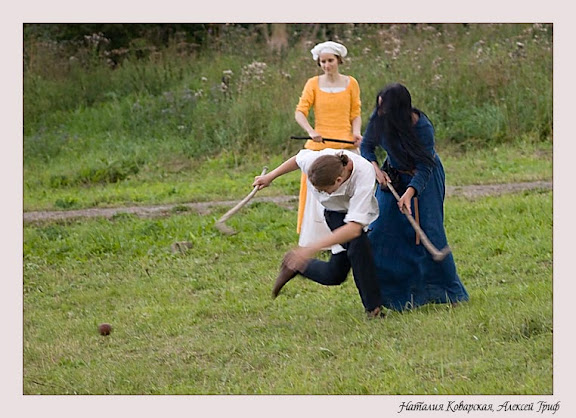
Cambok players


I'm dressed in yellow. Love this color, by the way.

To learn more about Cambok.

суббота, 23 августа 2008 г.

среда, 30 июля 2008 г.

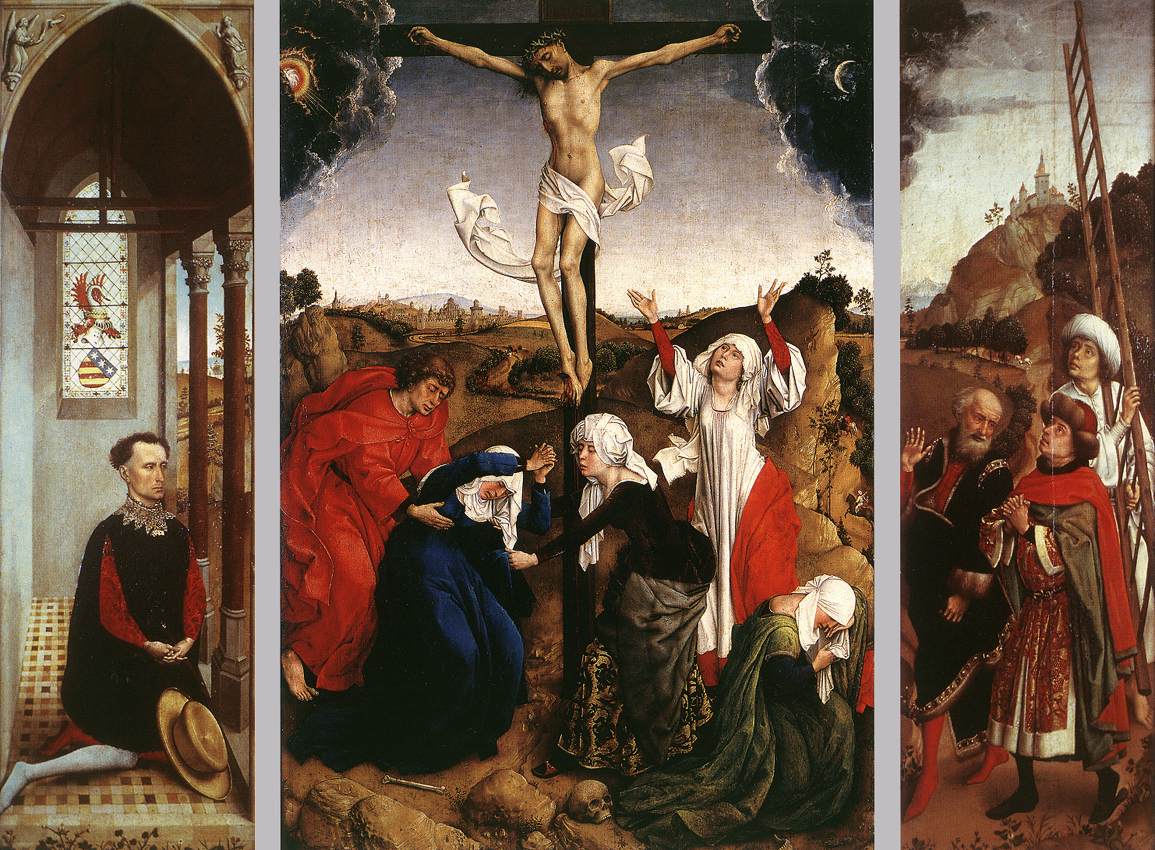
Sources of my yellow dress' pattern

1. Abegg Triptych by Rogier van der Weyden, c. 1445

Seam on the bottom side of the sleeve, form and lenght of the sleeves.
2. Visitation by Rogier van der Weyden, c. 1445
Visible side lacing on a long-sleeved dress.

3. Nativity by Hans Memling, c. 1475-1500

Sleeves' loose fit.
Mary wears here white gown over a dark (brown?) kyrtle, at the same time we can see no obvious evidences the gown is lined with fur, as is depicted in the most of paintings.


4. Nativity by Hans Memling, c. 1491

Low neck and forepart's design, yellow color.

вторник, 29 июля 2008 г.

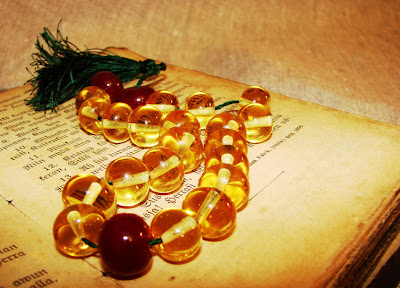
Drops of honey and drops of blood


Glass handicrafted beads, plain braid cord of dark-green silk.

Related sources:
1. Paternoster Row
2. The Medieval Rosary
3. History of the Scriptural Rosary
4. Rosary/Paternoster Collection
5. Development of the Rosary
6. Portrait of Giovanni Arnolfini and his Wife by Jan van Eyck, 1434
7. St Jerome by Jan van Eyck, 1442
8. The Ghent Altarpiece: The Holy Hermits by Jan van Eyck, 1427-30
9. Edelheere Altarpiece by unknown flemish master, 1443

Flemish garment upgrade

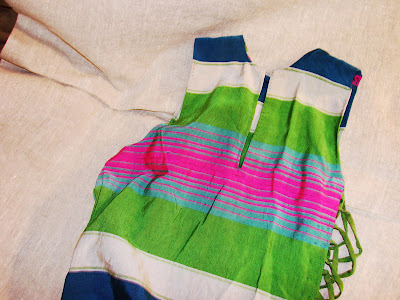
Few days ago one nice miss helped me to fit the pattern of a flemish dress to my chest. Today I made myself to start cutting details off.
Take a look!

Forepart


Back


Sleeve with it's pattern

New 13C dress

La Saya Encordada (por el patrón de una saya de Doña Leonor)
The sleeveless spanish tunic according to the pattern of queen Eleonore's saya.

Sources:
1. Así vestían los reyes de la Reconquista (resource in spanish)
2. Leonora of Castile's Dress at Marc Carlsons page
3. Leonor's saya - Recreating a 13th. c. Spanish dress


Related researches:
1. Costume in Christian Spain: XIII century garments
2. Her garment's description by Isolda Renard (resource in russian)

My precioussss yarn

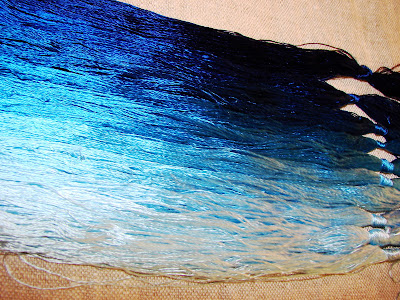
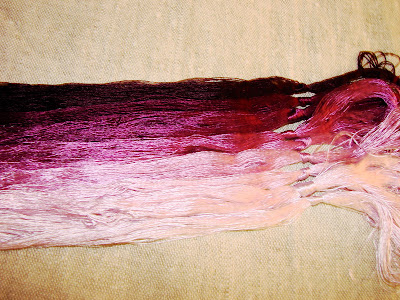
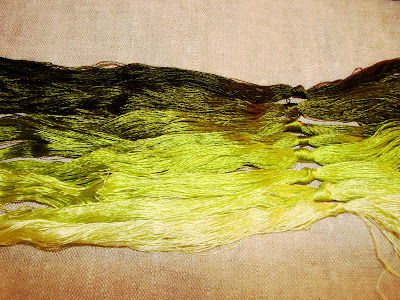
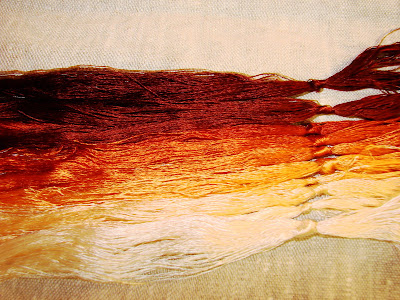
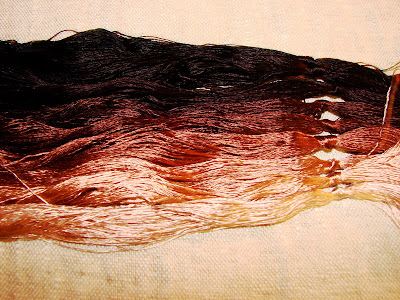
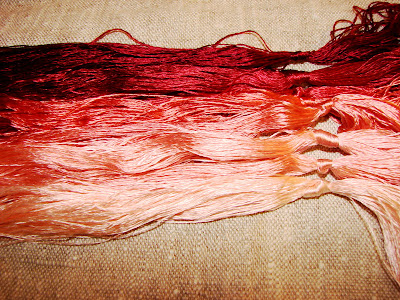
Just has arrived from China. Handmade, pure silk and hand-dyed with natural dyes.
It made my day!


среда, 9 июля 2008 г.

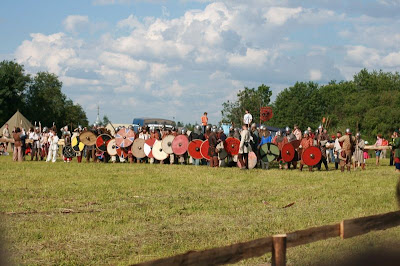
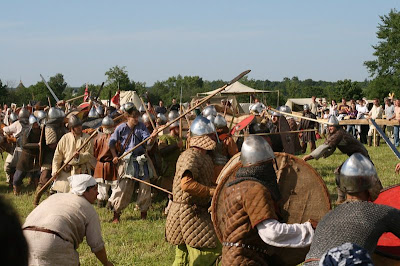
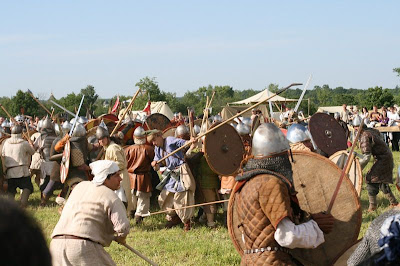
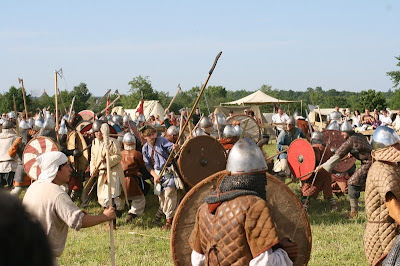
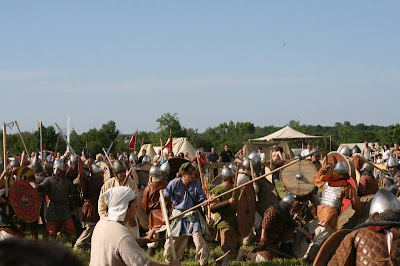
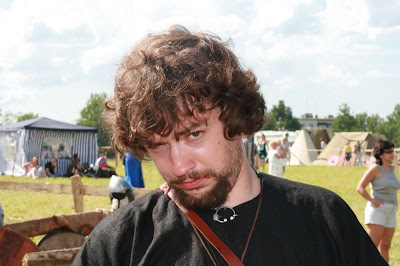
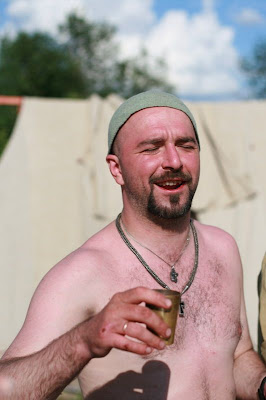
True Viking Era

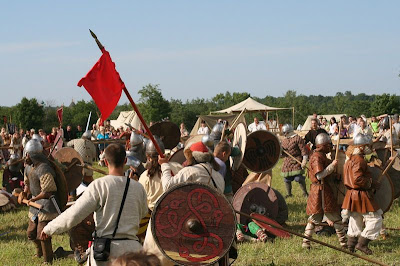
They came to the field and they fought until one side was dead


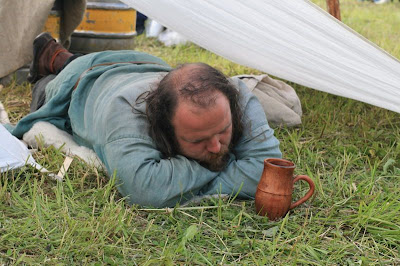
Sleeping berserk


Gangsta-viking. Yo!


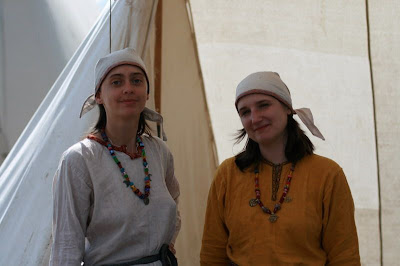
Ladies


Press icon


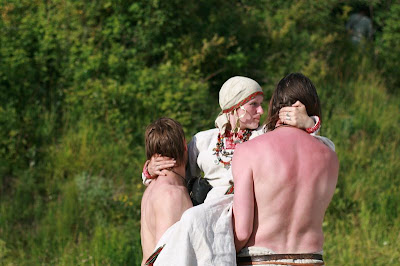
Wild men can be tender


Punk-Viking


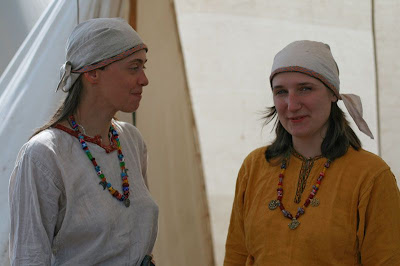
Pair of looks


Stolen girl


Farewell song on the edge of nirvana


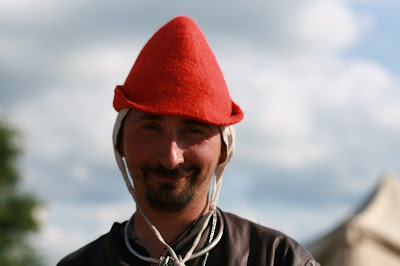
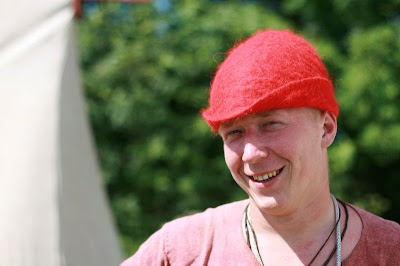
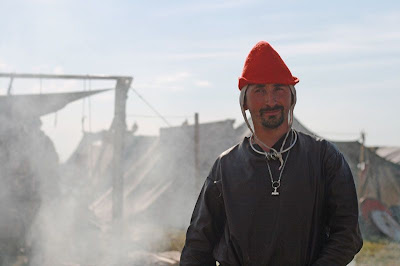
Red-headed vikings


Glassworkers crew


Cold sky of the Dark Ages